
In my earlier years at NALIS, I was privileged to have the opportunity to interact and communicate with persons who were either blind or visually impaired. This experience came through my knowledge of the Assisstive Technology for Visually Impaired Persons (VIP), where specialized ICTs (including hardware, software, and other equipment) were used to provide equitable access to persons with this disability. These new services aim to provide the differently-abled with the easiest access possible to the library’s services and resources.
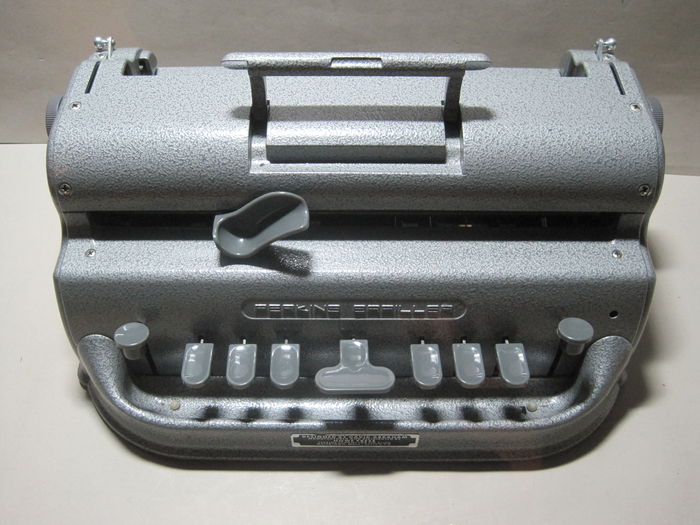
Image Courtesy Google Image Search
Of course, I had to multitask this with my other duties but in doing so I felt contented. Dealing with persons with disabilities requires a lot of patience, and I should point out that they can become very impatient when they feel they are not getting through or being ignored. This is where the ICTs made the difference to this community. The print collection included braille books, and large print books. ICTs like the picture in the foreground, optical character reading systems, braille display and magnification software are just some of the tools used to provide access to resources.
Take a read of this conference paper by Mrs. Pamela Benson, former Executive Director of NALIS, on the topic Libraries for the Blind.
Enough with the ICTs for now, my favorite time of the day was when called to assist patrons in the VIP room ( sometimes I even overstayed my welcome ), and I must mention that Miguel came everyday. I learnt a lot from working in this environment and gained a better knowledge and understanding of persons with this disability.
Libraries should do more to extend access to services for these persons and those with other disabilities.
What do you think? ICTs for all!!!
 Techbrarians Blog
Hi Kazim. I appreciate that you shared your experience about your time spent around visually impaired patrons at your library. I would imagine that staff must be knowledgeable about visually impaired patrons to be able to properly assist them with their needs. It is a fact that not many libraries have technology suited to accommodate these users, so I agree that more libraries should be equipped with the relevant technologies.
LikeLiked by 1 person
It’s commendable Kazim, that you grasped the opportunity to work alongside the blind and visually impaired patrons. Quite frankly, they have every right to ICTs and other services that the Library offers. While at NALIS, can you say that you were trained to work with persons with disabilities? Or was it a personal decision? Also, do you think that NALIS does enough to train their staff as it pertains to interacting with the disabled?
LikeLike
I must say that while not formally trained to work with persons with visual impairments, I gained knowledge and experience from interacting with them. However, in my early years at NALIS, I did a basic sign language course as part of their employee training. I can’t say if NALIS does enough to train their staff to work with this clientele at this time, as training budgets and opportunities for collaboration has certainly reduced, Nevertheless, it is something I strongly see as an opportunity for employee training and development.
LikeLike
I understand. I believe that as individuals, we have a responsibility to be as knowledgeable as possible. So that even if we don’t receive formal training from the organizations that we work with, it should be our prerogative to attain more skills, experience and knowledge pertaining to our roles within the organization. Once again, kudos to you Kazim. Keep reaching for those goals.
LikeLike